 FR
FR  EN
EN  NL
NL 
Faced with the housing crisis and climate challenges, the construction sector must reinvent itself. Today, innovation plays a key role in making homes more accessible, quicker to build and more environmentally friendly.
👉 Discover how new technologies are transforming construction and paving the way for more sustainable housing.
🔍 Why innovate in construction?
The construction sector lags behind other industries:
75% of construction companies in Europe do not innovate
Fewer companies use advanced digital technologies
👉 This lack of innovation hampers the sector’s ability to address the housing shortage and environmental challenges. [eib.org]
🏘️ Building faster and more cost-effectively through innovation
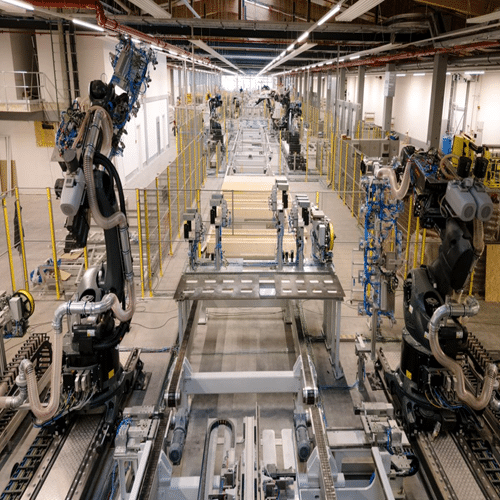
New companies are revolutionising construction methods, notably through:
Industrialisation and prefabrication
Automation and robotisation
Artificial intelligence
For example, certain solutions enable:
Prefabricating components in the factory
Delivering modules ready for assembly on site
Directly integrating electrical and plumbing systems
👉 Result: shorter lead times, controlled costs and better quality. [eib.org]
🌱 More eco-friendly materials to reduce the carbon footprint
Innovation also extends to materials:
Increased use of wood (a renewable material)
Development of low-carbon materials
Recycling of construction waste
👉 Cement, which accounts for around 8% of global CO₂ emissions, is a particular focus of these innovations. [eib.org]
Some companies are even developing solutions capable of:
Capturing and storing CO₂
Producing cement-free building materials
♻️ Circular and more responsible construction
New approaches aim to rethink the entire building lifecycle:
Sustainable design
Resource optimisation
Reuse of materials
👉 The goal: to move from a linear model to a circular economy in construction. [eib.org]
🤖 Artificial intelligence for renovation
Innovation isn’t just about new builds.
👉 Renovation is a major challenge:
75% of current buildings will still be in use by 2050
Renovations are essential to achieving carbon neutrality
AI-based solutions now make it possible to:
Quickly analyse a building’s energy performance
Automate diagnostics
Speed up decision-making
👉 This enables large-scale renovation to be carried out more quickly and efficiently. [eib.org]
💸 The balance between sustainability and affordability
A major challenge remains:
👉 How can we make housing sustainable whilst keeping it affordable?
Certain innovations (such as carbon capture) can:
Increase costs in the short term
But improve sustainability in the long term
👉 The challenge is therefore to strike the right balance between:
Prix
Energy performance
Environmental impact [eib.org]
🚧 Challenges to overcome
Despite progress, several obstacles remain:
Complex regulations
Cost of new technologies
Lack of large-scale industrialisation
Resistance to change within the sector
👉 These barriers are slowing down the adoption of much-needed innovations. [eib.org]
🌍 The key role of institutions and funding
Stakeholders such as the European Investment Bank (EIB) support innovation:
Funding for technology projects
Support for research and development
Accelerating the green transition
👉 With a clear objective: to develop affordable and sustainable housing on a large scale. [eib.org]
✅ Why this revolution is essential
Innovation in construction makes it possible to:
✔ Address the housing crisis
✔ Reduce CO₂ emissions
✔ Speed up construction projects
✔ Improve the quality of buildings
✔ Make housing more accessible
✍️ Conclusion
The construction industry is entering a new era, driven by innovation, digitalisation and climate challenges.
👉 From prefabricated buildings and low-carbon materials to artificial intelligence, the solutions exist to create buildings that are sustainable, energy-efficient and accessible.
But to make this transition a success, we will need to speed up the adoption of these technologies and remove the barriers that still exist within the sector